
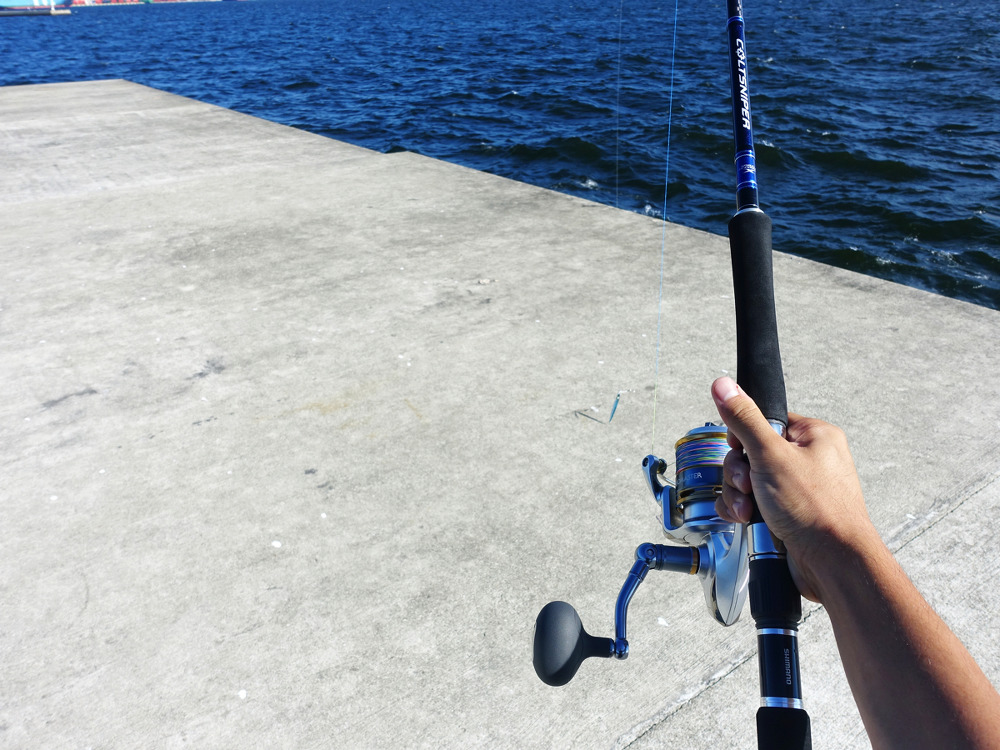
Is there really a relationship between line thickness and casting distance?
The use of PE (composite) lines is becoming more common not only in long-distance fishing but also in lure fishing. In the last article on “How to improve the distance of surf lures”, I was unable to provide objective and specific evidence for the content that said, “If you couldn’t go over 100m using a No. 1.5 PE line, you can get close to or exceed it by changing to a No. 1 PE line.” Then, I found that a monthly magazine called Leisure Fishing published in Japan conducted such an experiment, so I’m posting a brief summary of the content.
The experiment consisted of three parts:
First, the change in distance according to the thickness of the line
Second, the change in distance depending on the material of the arrow used (tungsten and lead)
Third, the change in distance depending on the number of needles used.
First, in order to find out the change in distance according to the thickness of the line, the rod used was a 9.8-foot bass lure rod and a 3000 spinning reel. The lure used was a 12cm minnow. Without attaching a hook, I made 3 full casts with PE lines of size 0.8 and 1.5 and compared the results.

According to the experimental results, the difference in distance depending on the thickness of the line is about 10m. In reality, if the distance differs by about 10m in a fishing spot, it can be said to be a significant difference.
Of course, the scientific objectivity of the experiment cannot be guaranteed, but the results are certainly meaningful.
Second, the equipment and supplies used in the experiment on the change in distance according to the material of the arrow used (tungsten and lead) are as follows.
Road: Kiss Special 405CX
Reel: Super Aero Kiss Special
Line: 0.6
Himsa: 0.8~7
Bongdol: Tungsten and lead bongdol of No. 30

It is commonly known that if the weight is the same, a tungsten weighted arrow will travel farther due to less air resistance, but the experimental results showed that the tungsten weighted arrow had a better distance.

Although the experimental results showed a difference in distance exceeding 13 meters, it is right not to use lead billets because they are illegal.
However, even if it is a lead-based sinker, it is legal to use one that has been coated to prevent lead from leaking into the water.
The third experiment was conducted using barley anchovy rigs with 3 and 8 needles attached to each rig, and the results showed a difference of approximately 5 m.

Although the method and conditions of the experiment were not scientific, it was very meaningful in that it answered the question that had been raised for a long time: “How much does the thickness of the line affect the distance?” and that it allowed us to actually confirm the difference in distance depending on the material of the sinker.


Leave a Reply
Want to join the discussion?Feel free to contribute!