
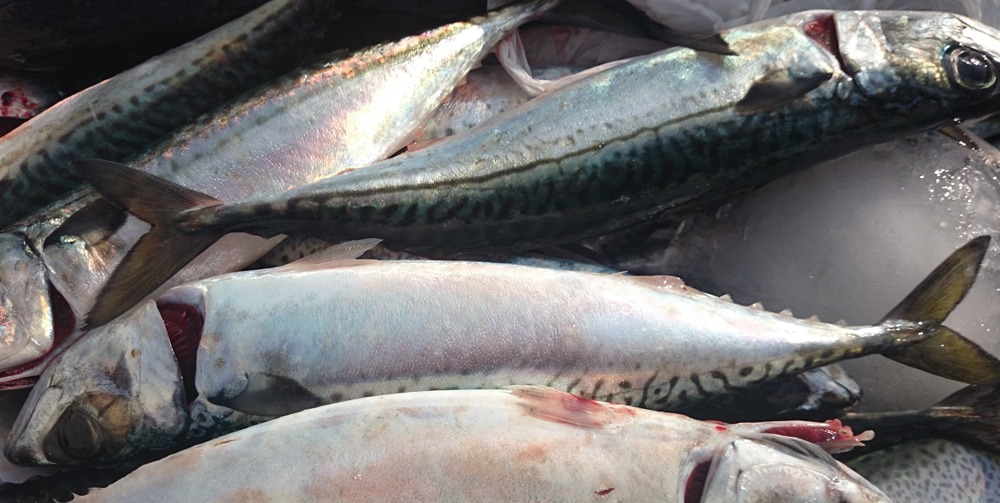
Histamine food poisoning, mainly caused by blue-backed fish
A few days ago, I saw a news article saying that the histamine detection kit, which costs 800,000 won per unit and is being imported entirely, was developed for the first time in Korea by the National Institute of Agricultural Science and Technology Planning and Evaluation.
According to the announcement by the National Institute of Agricultural Science and Technology Planning and Evaluation, “two types of kits for detecting histamine in tuna, mackerel, and tuna have been developed.” However, food poisoning caused by blue-backed fish such as tuna, mackerel, and tuna is “histamine food poisoning,” and most people only know it as “allergic food poisoning caused by eating fish that has lost freshness.”
Now, with news of mackerel being found in the nearby Sihwa Breakwater, let’s learn about “histamine food poisoning,” which is especially related to health during the summer when we need to be especially careful about food management.
Histamine food poisoning is a type of food poisoning that occurs mainly when eating blue-backed fish such as tuna, mackerel, Japanese swordfish, horse mackerel, and yellowtail, as can be seen from the name “Scombroid Fish Poisoning” or “Scombroid Poisoning” which is prefixed with the word “Scombroid” which means mackerel in English.
Histamine is created when a bacterium called Morganella morganii acts as an enzyme to convert histidine, one of the 20 amino acids that make up the proteins contained in food, into histamine.
Therefore, if blue-backed fish, which is high in histidine, is improperly handled, such as by leaving it at room temperature, histamine-producing bacteria will proliferate, resulting in the production of histamine. Once histamine is produced, it cannot be broken down by heating or removed during processing, making it impossible to prevent food poisoning. Therefore, special care must be taken.

The cause of general food poisoning is bacteria, so it can be prevented by heating or sterilizing, but the scary thing is that histamine food poisoning is not caused by bacteria, so even if you grill the fish until the skin is burned, it cannot be prevented . In other words , histamine is only partially killed when heated to 102℃ for 3 hours, and it can be produced even when stored at low temperatures (0-10℃), so it is best to eat it as soon as possible .
Toxic food poisoning, such as histamine poisoning, is similar to the danger of eating poisonous mushrooms after boiling them. To prevent histamine poisoning, if you catch a blue-backed fish with red flesh while fishing, quickly drain the blood and be sure to remove the gills and intestines, which are often contaminated with Morganella morganii, a bacteria that also lives in saltwater .

Also, if you eat fish containing histamine, you will feel a irritating taste like putting a metallic substance on your tongue, so in this case, it is better to not eat it and throw it away. Also, Morganella morganii, which produces histamine, multiplies actively at high temperatures above 20℃, so it is better to not eat any that has not been refrigerated at a low temperature. For your information, in foreign countries, there have been rare cases of food poisoning after eating canned products.
If infected, symptoms appear 10 minutes to 3 hours after eating and last for an average of 14 hours (up to 36 hours). Symptoms include nausea, vomiting, diarrhea, abdominal pain, headache, swelling of the tongue and face, and hives.
If you unfortunately get infected, you can take antihistamines, but you must get a prescription, and it is best to bring vomit to the hospital to determine the exact cause .


Leave a Reply
Want to join the discussion?Feel free to contribute!