
Egging Fishing – Tips for Choosing a Egi
There are three factors that influence the selection of squid: climate, seawater turbidity, and time of day. These factors influence the size and color of the squid.
As your skill in selecting squid increases, so does your fishing ability. So, let’s learn how to select squid.
1. Size of the squid
Squid squid comes in sizes 2.5 to 4.0, with the standard size being 3.5 and increasing in increments of 0.5. While smaller squids, down to 2.0, are now available, squid squid in sizes 3.0 to 4.0 are sufficient.
The size of the lure should be chosen in proportion to the size of the squid being caught. In the fall season, there are many small squid that were born and grew that year, so use around size 3.0. In the spring, the target is large, fully grown squid, so use around size 4.0.

However, it is not possible to say in general terms. Small squid may respond to a size 4.0 lure, and large squid may respond to a size 3.0 lure.
Remember that the size of each jig is about 3cm, and squid will eat up to 1.5 times their body length, so when you arrive at the fishing spot, it is a good idea to check the size of the squid caught by other anglers and then choose a jig.
2. Color of the squid
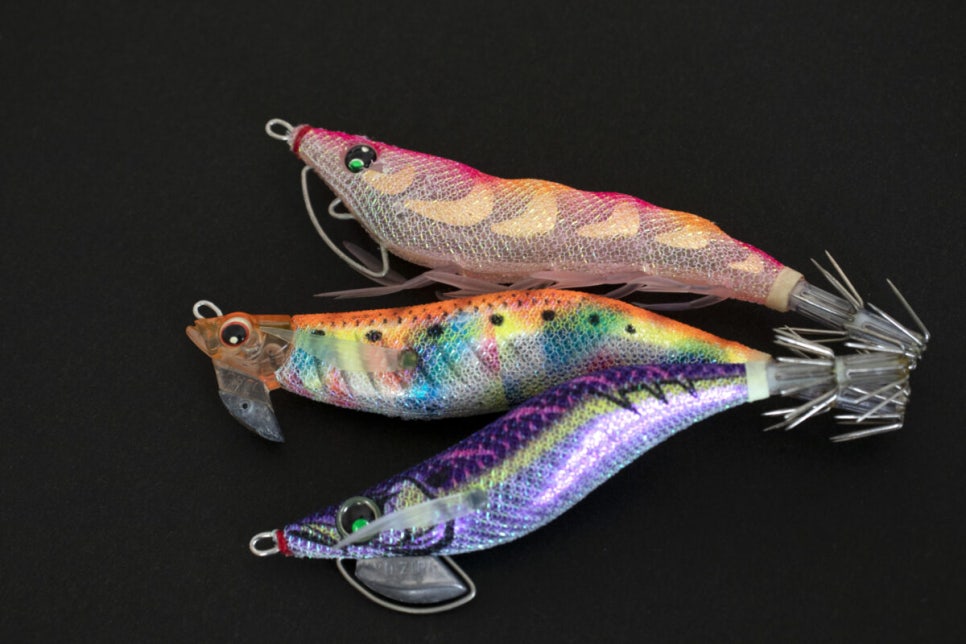
Among the color, size, and type of squid in egi fishing, I believe the most important is the color of the squid. The sheer variety of squid colors available at fishing shops can be overwhelming, making choosing the right one a challenge. Squid color is comprised of the base color and the body color.
The base color, also known as the “base color,” refers to the color of the tape wrapped around the body of the squid, while the body color is the color of the fabric covering the base color. Because the body color is made of fibers, the base color is visible through the mesh of the fabric.
The color of the squid lure has an appeal factor that indicates how appealing it is to squid. The higher the appeal factor, the more vibrant the color, with orange and pink being the most representative colors.
In contrast, dark colors with low appeal include olive and dark red, and colors in between, such as blue, are called natural.
When the squid is active, it is better to use something with high appeal, and when the activity is low, it is better to use something with dark appeal. Everyone knows that when the squid is actively feeding, it is said to be active, and when it is not, it is said to be low, but I am writing it down just in case^^
The easiest way to determine squid activity is to see if there are many people fishing nearby, but a common criterion is the time of day. Fish are known to be most active around dawn and dusk, so targeting these times is recommended.
During this time, it is better to use orange or pink, which have high appeal. On the other hand, if there is no fish caught, it means that the activity is low, so it is better to use dark olive or dark red colors, and if there is no reaction even after doing so, it is better to use natural blue colors.
Next, the basic colors are gold, rainbow (marble), silver, and red in order of increasing appeal. It is recommended to use gold when activity is high and red when activity is low. If you still cannot catch it, it is recommended to use rainbow (marble) and silver.
In addition, the weather and sea fog also have an effect. When the weather is clear, it is better to use colors with low appeal (dark series), and when it is cloudy or rainy, it is better to use colors with high appeal. When the sea is clear and clean without fog, it is better to use colors with low appeal (choose dark series), and when it is cloudy and the bottom is not visible, it is better to use colors with high appeal. Please refer to the table below for basic color selection criteria.
|
Orange/Gold
|
pink/rainbow
|
Blue/Silver
|
Olive/Red
|
|
|
Weather: Clear
|
◎
|
○
|
△
|
△
|
|
Weather: Cloudy
|
△
|
○
|
◎
|
○
|
|
Sea: Transparent
|
◎
|
○
|
△
|
△
|
|
Sea: Fog
|
△
|
△
|
○
|
◎
|
|
Just before sunrise
|
◎
|
○
|
△
|
△
|
|
afternoon
|
△
|
△
|
○
|
◎
|
|
Just before sunset
|
◎
|
○
|
△
|
△
|
And there are exceptions that emit fluorescent and ultraviolet light. Fluorescent lights are used for night fishing and are also used in deep waters with high turbidity, but are not commonly used.
I think it’s pointless to use a squid that glows with UV light at night, and if you don’t get a reaction from using squid of various colors during the day, it might be a good idea to try it out once in a while.
3. Decide on the type of squid
There are three types of squid jigs: swamplow, sinking, and normal. Some manufacturers even produce sinking jigs in categories such as heavy sinking and fast sinking. These types indicate the speed at which the jigs sink, with sinking types sinking quickly and swamplow types sinking slowly.
For each purpose, the sinking type is used in deep water (where squid swim deep), the swamp type is used in shallow water, and the normal type is our favorite (^^) all-purpose type. You can also attach a sinker to the normal type to sink it quickly.
Taking advantage of this habit, a technique of slowly sinking a swamp type lure is used in deep areas, and in addition, a lure that sinks quickly is used in areas with fast tidal currents because the lure would otherwise be washed away.
If you are new to eging fishing, I think it would be a good idea to try the normal type first, and as you gain experience and personal know-how, check the depth of the sea and the flow of the tide and choose a different egi. I think there will be many people who are targeting cuttlefish this year as well, and I hope that you all get satisfactory results. I will end this article with that in mind.


Leave a Reply
Want to join the discussion?Feel free to contribute!