How to properly store clams

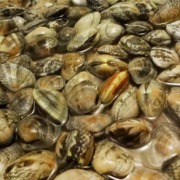
How should clams be stored? And how long can they be stored? The answer to this question can be easily found by understanding their ecology and habits. Let’s take a closer look at how to store clams at room temperature, in the refrigerator, and in the freezer.


■ When storing clams at room temperature

According to the food code, room temperature is 15℃ to 25℃, but clams start to lose weight when the temperature exceeds 18℃, some die when it exceeds 20℃, and the number of dead clams increases when it exceeds 25℃, so even when stored at room temperature, it is best to keep the temperature between 10℃ and 15℃.

As seen in ‘How to Defrost Clams’ , the optimal temperature for defrosting clams is between 15℃ and 18℃, which is the temperature at which clams are most active, and is not appropriate for storing clams.

When storing clams at room temperature, the temperature should be between 10℃ and 15℃, which is when the clams enter a dormant state. This will suppress their activity to a small extent and extend their storage period. However, even if this temperature can be maintained,  storing clams at room temperature is not recommended because the water needs to be changed periodically.


■ When storing clams in the refrigerator

When storing clams in the refrigerator or freezer, they must be dehydrated before storage.

One thing to keep in mind is to check for dead clams before storing them in the refrigerator. If the water after clamming becomes significantly cloudy, check to see if any clams are not opening their mouths or check for dead ones by bumping them together and judging by the sound.

It is best to store clams in 3% salt water. To minimize the damage from residual chlorine, it is more effective to make the 3% salt water using boiled and cooled water rather than using tap water as is.

The best temperature for refrigeration is between 7℃ and 10℃. Be careful not to close the lid of the container you store it in as this can cause the clams to die. If you plan to eat it the next day, it is also a good idea to wrap it in a wet newspaper or kitchen towel before storing it.


One of the most common misconceptions among housewives is that, when purchasing clams from a supermarket or online, they are printed with instructions such as “within 5 days from the date of manufacture” or “store in a cool place” or “store at 0℃~10℃.”

However, this is mostly set based on storing clams at around 4℃, and the storage period is set to 5 days.  Since clams are in a hibernation state at 4℃, the storage period can be 5 days, but if you are harvesting clams at home, it is better to store them for only 1-2 days because you cannot tell when they were harvested .


■ When storing clams in the freezer

The most important thing when storing clams in the freezer is to freeze them as quickly as possible.

To do this, it is recommended to freeze them by placing them on a metal tray with good thermal conductivity or wrapping them in foil. Another way to freeze them quickly is to make sure the clams do not overlap.

When freezing in a plastic container commonly used at home, it is best to remove as much air as possible. If the air is completely removed, it can be stored for up to a month, so if it is difficult to store in a vacuum, it is better to eat it as soon as possible.

Of course, it is okay to eat it after storing it for about two months, but in the summer, when the refrigerator door is frequently opened and closed, the temperature is not maintained consistently, so the preservation period is shortened, and unlike freeze-drying, the drying process progresses slowly, which has the disadvantage of causing the taste to deteriorate.

If you must store it for more than a month, it is best to store it in a plastic container filled with ice or ice water and quickly freeze it.


Again, instead of freezing them in a container filled with water, you should fill it with ice or ice water and freeze it as quickly as possible.  The most important factor in freezing clams is how quickly they are frozen, so freezing them on a metal tray is also effective.

Are there any fish that are easy to catch?

In “Do fish remember being caught with a hook ?” we looked at “Beukema’s learning theory” which states that fish remember being caught with a hook. This time, we will look at “Martin’s hypothesis” which states that there are certain fish that are good at being caught with a hook.

The so-called “Martin’s hypothesis” was first proposed by American oceanographer John Martin, and states that there are some individuals that are naturally less cautious but more curious, making them good fish to catch.

To verify Martin’s hypothesis, an experiment was conducted in Japan in 1992, in which Mozambique tilapia were placed in an experimental pond and fished.


Mozambique tilapia


The total number of Mozambique tilapia used in the experiment was 144. If the hypothesis that there are individuals that are easy to catch by fishing is true, then even if only the Mozambique tilapia caught by fishing are collected and fished again, a certain percentage must continue to be caught for the hypothesis to be established. The subject of the experiment was.

So the researchers placed 144 Mozambique tilapia in a halved pond, caught half (72 fish) and placed them in a new pond, fished them a second time, and collected the fish from there and caught them a third time. They observed whether a certain ratio would be maintained.

However, contrary to expectations, the experimental results showed that out of the 72 fish caught in the first fishing trip, 51 were caught in the second fishing trip, and out of the 72 fish not caught in the first fishing trip, 51 were not caught in the second fishing trip either.

The results of the third fishing trip showed the difference more clearly, that is, it was confirmed that Mozambique tilapia that were caught once were easily caught the second time as well, but those that were not caught in the first fishing trip were not caught well in the second and third fishing trips either. The number of individuals that were not caught well in fishing trips predicted before the experiment to be 18 individuals (12.5% ​​of the total) actually exceeded the number, which was 41 individuals (49% of the total), confirming that there are definitely individuals that are difficult to catch by fishing.

Finally, the researchers observed individuals easily caught by fishing and discovered that they reacted more strongly to food than other individuals. This suggests that individuals with a stronger appetite were more likely to catch fish. This once again demonstrates that greed is the root of all evil.

However,  “Beukema’s learning theory” and “Martin’s hypothesis” had inherent limitations: the experiments were conducted in an artificial experimental environment without other fish competing for food  .

Accordingly, in 2002, neighboring Japan conducted a rather crude experiment in which they selected four sections of 500 to 700 meters deep in a mountain valley in Hokkaido, which is rarely visited by anglers, and caught trout by fishing from sunrise to noon. They then shocked the remaining trout with electricity, caught them all, tagged them, and released them. After 50 days, they conducted a second experiment.


And 50 days later, when the researchers investigated the trout caught by fishing again, they found that the ones that were caught by fishing for the first time, tagged, and released were caught in similar ways to the ones that were not caught by fishing for the first time. This showed that both “Beukema’s learning theory”, which states that fish caught by fishing remember that experience and are therefore less likely to be caught, and “Martin’s hypothesis”, which states that some fish are inherently more likely to be caught, were not correct. Therefore, they concluded that observations in artificial experimental facilities are different from the actual state in nature, and that the habits of fish cannot yet be scientifically explained.

Of course, I, the author of this article, have no background in oceanography or ichthyology, just an individual who enjoys fishing. I also know that there is no perfect technique for achieving success in fishing.

While most fishing experiences are a result of a coincidence of various conditions, often in different weather and environments, catching a fish is a matter of luck. I believe that the true joy of fishing lies in analyzing why a catch occurred, interpreting it in your own way, developing your own new hypothesis, and then testing it.

Finally, let me share the main points of this article, which I’ve written in two parts. In my previous  article, ” Can Fish That Swallowed Hooks Survive If You Release Them ?” , I examined the results of releasing 77 trout that had swallowed hooks. The hooks decayed and were released from their bodies, and nearly 70% of them were re-caught.

In other words, if “Beukema’s learning theory” and “Martin’s hypothesis” are correct, then it would be wiser to release fish so that they can grow properly in order to catch the big fish that anglers hope for. Even if the two theories are wrong, released fish can be caught again in the wild, so I expressed it this way to say that it would be good for us anglers to at least practice the standards for closed fishing periods and body lengths.

How to prepare scallops and what to watch out for when eating them raw

Now that scallops are in season, if it were any other year, the clam grill restaurants would be bustling, but this year, due to the coronavirus, I often see the lights of the Daebudo clam grill restaurants that I pass by on my way to fish turned off.

However, since live scallops can be easily purchased online, many people seem to be steaming or grilling them at home.

And in rare cases, you can see on the internet that people prepare scallops they have purchased and eat them raw. Let’s find out what you need to be careful of when eating scallops raw.

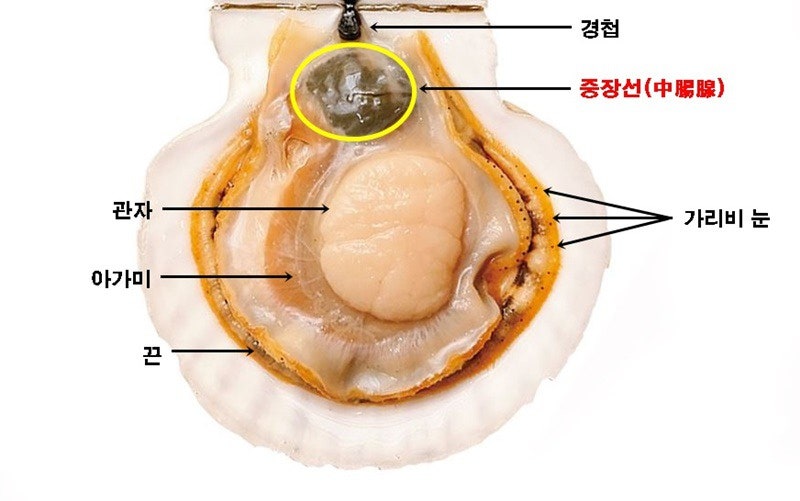
When eating scallops raw, you must remove the midgut gland. (It is also best not to eat them when cooked.)

When you open a scallop, there is a black area below the hinge, which is the midgut gland, which plays the role of the liver and stomach.

Shellfish, including scallops, consume phytoplankton, but  they also consume toxic plankton such as dinoflagellates . These toxins accumulate in the midgut gland and can cause food poisoning when eaten by humans, so they must be removed.

In particular, unlike other shellfish, scallops often retain the poison for a long period of time because the metabolic rate at which the toxins accumulated in the midgut gland are excreted from the body is very slow.

The next inedible part is the gills of the scallop, which must also be removed.

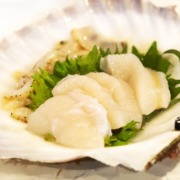
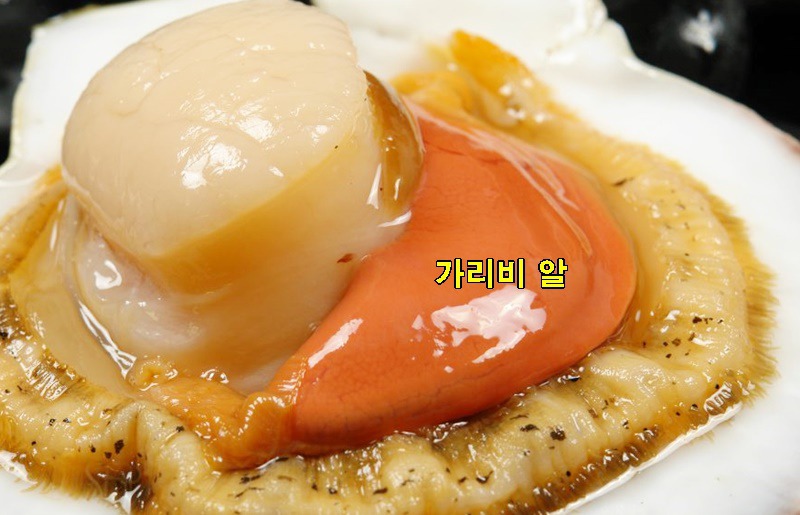
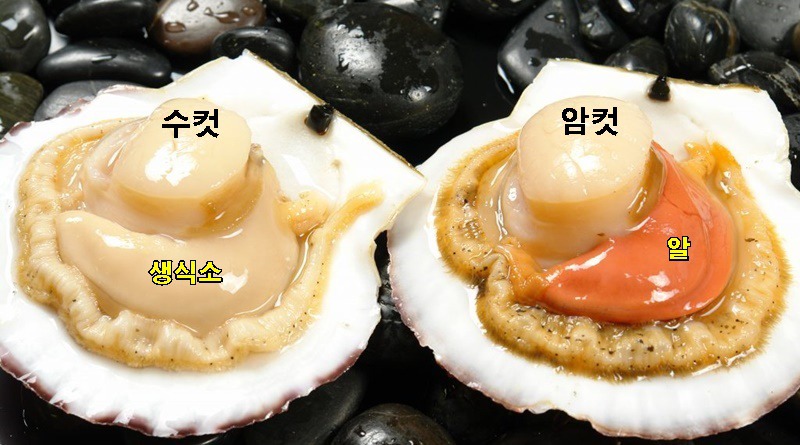
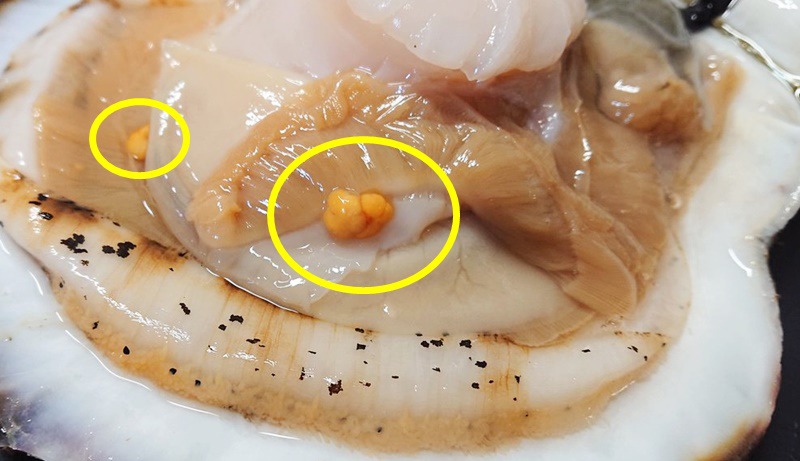
Meanwhile, when eating scallop sashimi at a sushi restaurant, in rare cases, you may see a red part like the one in the photo below. This is scallop roe.

On the other hand, the gonads of male scallops are white and should be eaten cooked unless they are very fresh.


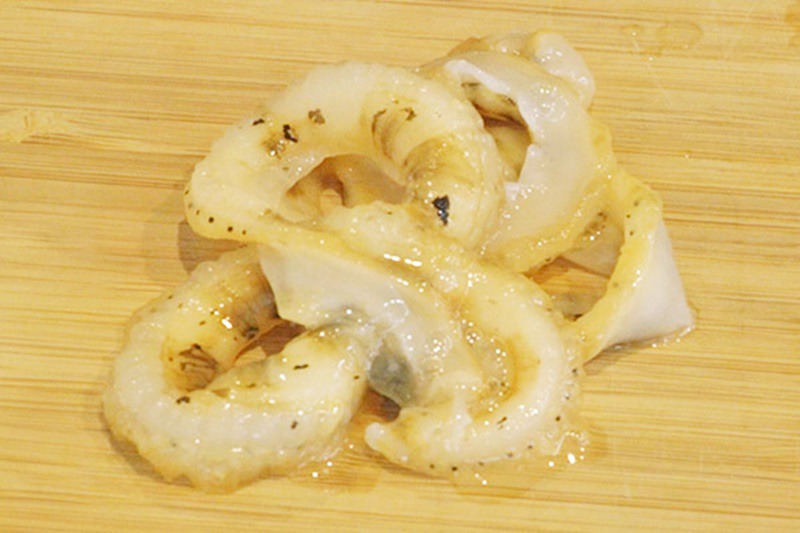
The following is the string with the scallop’s eyes, which has been reported in the media. It is an edible part, but it is better to remove the mucus with the back of a knife to improve the texture. The black dots are the scallop’s eyes and can be eaten.

Finally,  as I briefly mentioned in my post “How Many Japanese Scallops Are We Eating?”, 99% of Japan’s farmed scallop production is in Hokkaido, and some of the scallops caught there are found to contain parasites.

This parasite is  also introduced in  the National Institute of Animal Quarantine’s library as “Pectonophilus in scallops – a disease that can be found in farmed scallops in the northern Tohoku region and southern Hokkaido. Caution is advised as the area where this disease occurs has been expanding recently. “

The scientific name for scallop pectenophilosis is Pectenophilus ornatus. Pectenophilus means ‘loving scallops’, and ornatus means ‘bright color’, meaning that the parasite loves scallops with their bright colors.

What is unique is that the male lives inside the female’s body, and it is not a problem because it can grow up to 8mm in size and cannot live inside the human body.

There have been no reports of this parasite being found in Korea so far, so if you find it in a scallop, it is likely that the scallop came from Japan.

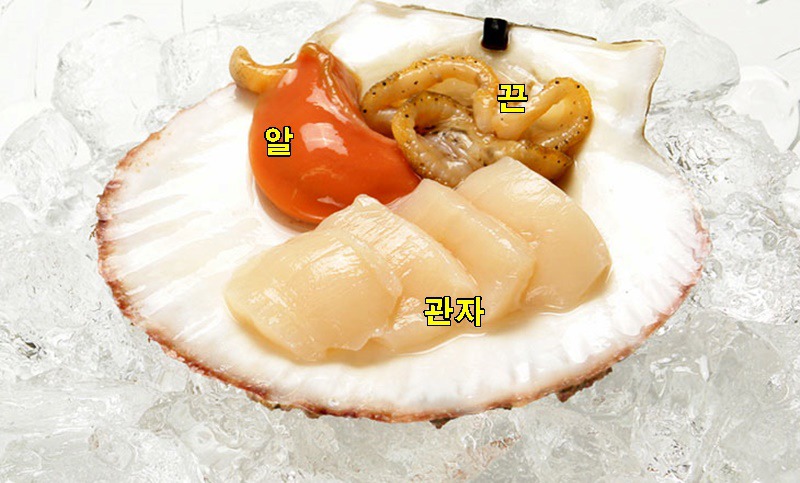
To summarize,  when preparing scallops yourself and eating them raw, you should not eat any parts other than the scallop shell, strings, and roe (or gonads).


What are the blue spots on the skin of sauries?

Sauries, which is in season in the fall, has become a staple side dish served at raw fish restaurants year-round as it has become natural to eat frozen imported sauries due to the decrease in catch.

However, while purchasing sauries online, it seems that the seller does not know what the blue spots on the sauries’s skin are, so I would like to write a few words, even though it may be presumptuous.

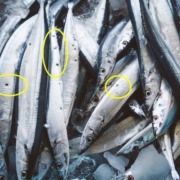
If you look at the product description posted by the seller, the blue spots on the sauries are written as follows : “Just as people have spots, sauries and other fish also have spots. The blue spots on the surface of the sauries are not caused by a rotten product, but rather occur naturally on the sauries’s body~(omitted) . ”

However, these are not dots but scales of anchovies. Let’s find out why anchovies’ scales are embedded in the skin and why they are light blue in color.

Before we delve into that, let’s briefly examine Korea’s import situation for anchovies. Taiwan accounts for over 90% of Korea’s total anchovies imports, followed by Vanuatu. Combined, these two countries account for over 98% of imports.

Imported sauries is caught through net fishing, and when a large number of sauries are caught in large nets, the sauries collide with each other, causing their scales to come off. These scales are then swallowed by the sauries, and when freshly caught sauries is grilled and eaten, sometimes the scales come out of the intestines.

Image source: National Institute of Fisheries Science, Fisheries Operations Diagram


Most of the scales of sauries caught with a net fall off during the landing process, but those that remain are discovered during the rapid freezing and then thawing process.

Heme, the pigment part of hemoglobin that contains iron, is broken down in the liver and changes into biliverdin, a blue-green bile pigment, or bilirubin, a reddish-brown bile pigment. In some fish species, including sauries, biliverdin becomes calcium salt, turning the bones and scales blue.


The scales of the sauries that have turned sky blue like this are stuck to the skin and are noticeable to us during the thawing or preparation process.

Finally, there’s a lot of information out there on how to choose fresh sauries when buying live sauries, but I feel like I’m missing the most important part, so let’s just cover what it is and end this article.

When selecting a fresh sauries, the most important thing to keep in mind is its lower jaw .  A yellowish lower jaw indicates freshness , meaning it was caught less than three days ago. After that, it begins to turn brown as freshness declines. It’s not easy to find such a fish, but it might be helpful to keep this in mind. ^^


How did Weihai become the mecca of China’s fishing tackle industry?

Weihai City (威海市), a port city in eastern Shandong Province, China, has over 4,000 fishing gear manufacturing and related trading companies, and according to a report by Alibaba, Weihai City’s fishing gear exports in 2018 exceeded 1.92 trillion won at the current exchange rate.

For the city to become the center of the fishing gear industry as it is today, there were external factors, but it can also be said that the firm will of one company representative served as the foundation.

As I’ve discussed on my blog several times, our country’s fishing gear industry once played a significant role in earning foreign currency thanks to the country’s export-driven policy.

However, as labor costs rose following the 1986 Asian Games and the 1988 Olympics, global fishing gear companies looking for cheaper labor than domestic companies turned their eyes to China. One day, a Japanese company visited a company in Weihai City, where there were many factories producing plastic products at the time, and asked if they could make fishing rods made of fiberglass.

A Japanese company, believing that a company with accumulated light industry technology could produce a product with just a little technical guidance, succeeded in producing a prototype, albeit somewhat imperfect, after a year of effort with a Chinese plastic product manufacturer.

And the Chinese company that made the prototype established a company specializing in producing fishing rods, which is now Shandong Huanqiu Fishing Gear Co., Ltd.


The company currently employs 2,000 people and has an annual production capacity of 15 million fishing rods, with exports exceeding 180 billion won in 2021.

The fishing gear industry in Weihai, which started with the production of fishing rods made of fiberglass, was completely established as a mecca for fishing gear thanks to the fishing rod factory established in 1988 by a man named Chen Guangwei. The company established by Chen Guangwei is  the very company introduced in the article titled, “China’s fishing gear company with the world’s 4th largest sales.”

If you Google Chen Guangwei (陈光威), a lot of information comes up. As you can see from the descriptions of him as a pioneer in carbon fiber in China and the founder of the fishing gear industry, the influence he had on the fishing gear industry not only in China but also around the world is enormous.

Although he is now deceased, I think the words he said while he was alive,  “The power of a brand comes from quality, and that power is the key to winning the competition,” are worth taking to heart for domestic fishing gear companies.

Chen Guangwei (陈光威: Chen Guangwei) during his lifetime


The production of carbon fishing rods, which President Jin Gwang-wi had turned his attention to, faced difficulties because at the time, it was difficult to import carbon fiber, the raw material, to China due to concerns that it would be diverted for military use, and even if it was imported, it was very difficult to report the intended use and amount of use in detail.

However, instead of giving up, President Jin Guangwei decided to produce prepreg directly, introducing production facilities in 1998 and starting to produce raw materials directly. His decision, which may have been reckless, was able to bear fruit largely due to joint research with the ‘863 Expert Group’ created when the Chinese Ministry of Science and Technology launched a carbon fiber development project with a budget of approximately 36 billion won in 2001.

As a result, in 2004, the company developed a product comparable to Japan’s T300 class, and has now become a leading company in China’s carbon fiber industry, producing materials for fighter jets as well as fishing rods.

As companies that could easily obtain carbon prepreg, the raw material for fishing rods, were located in the city, related companies naturally began to gather one by one, and as a result, it has now become the world’s largest fishing gear production base.

I conclude this article by promising to introduce the story of the late Chen Guangwei (陈光威) of the Guangwei Group in several more installments.

Does remember the fish being caught by fishing?

When fishing in rivers, oceans, and reservoirs, you may occasionally encounter fish that don’t even bother to bite the bait, even though they are actually numerous and active. This can often lead you to conclude that the fish are either becoming more wary or their numbers have decreased.

In response to these questions that anglers have, there have been two theories that have been passed down for over 50 years: one is that fish that have been caught at least once remember the hook and have learned from it, so they are not easily caught; the other is that some fish are inherently good at catching. Recently, the results of an experiment that combined these two theories have been published.

There is “Beukema’s learning theory” that fish remember the experience of being caught by fishing, and “Martin’s hypothesis” that there are individual fish that are good at catching. Today, we will first learn about “Beukema’s learning theory”.

Dr. Jan J. Beukema of the Royal Netherlands Marine Institute published a paper in 1970 that could be translated as “Decreasing catchability through one-trial learning.”

For his experiment, Dr. Beukema placed carp that had never been caught by fishing before in a test pond and had 800 people fish every day for two weeks, using whatever equipment and bait they wanted.

However, any carp caught had to be tagged and released, and fishing time per person was limited to four hours per day.


According to the experimental results, the best catch per person was on the first day (average 1.24 fish), and it started to decline from the second day, and on the fifth day, it was about a quarter of the first day’s catch. In other words, the fact that it became increasingly difficult to catch carp even though there was always the same number of carp in the pond led me to think that the carp might be avoiding the bait attached to the hook after learning from the experience of being caught on the hook. To verify this, I used two methods.

The first one predicted and actually observed that whether or not a carp without learning effect would be caught would be determined randomly and that the number of times it was caught would match the “Poisson distribution.”

However, the experimental results were significantly different from the Poisson distribution, contrary to the predictions, and the number of carp caught for the first time was much lower than predicted.

The second verification method was to see what percentage of the carp caught that day had been previously caught by fishing. From day 1 to day 4, 20-30% of the carp that had never been caught before were caught by fishing, confirming that the carp that had been caught by fishing before were more likely to be caught than the 5% that were caught again.

However, from the 5th day onwards, regardless of whether they had experience catching fish or not, they only managed to raise the catch rate by 5%. Based on this, Dr. Beukema concluded that this was due to the learning effect that most of the carp in the pond had already been hooked at least once after 4 days since the start of the experiment.


Dr. Beukema also announced that the fish’s learning effects persist even after a year. How is Dr. Beukema’s theory currently being accepted? And can it be validated simultaneously with “Martin’s hypothesis,” which we’ll discuss next time, that certain fish are particularly good at catching?

If you’re curious, please look forward to the next episode^^

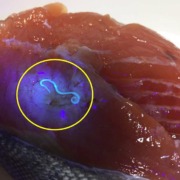
Anisakis can be found a little more easily using a black light.

As the shift from social distancing due to COVID-19 to social distancing in daily life took place, the spread of the virus exploded, centering on clubs in Itaewon, Seoul. The fishing industry could not avoid the impact of COVID-19, so Boryeong City is providing emergency living expenses to those who operate fishing boats.

However, according to  the May 1, 2020 online article in the Electronic Times titled,  “Auction, Camping and Fishing Solo Leisure Goods Boom… Single-Person Tents Triple Up,” “Sea fishing gear sold 31% more, freshwater fishing gear sold 56% more, and lure fishing gear also saw a 56% increase in sales. Fishing sets for beginners also saw an 86% increase in sales. ”

As the number of people fishing alone increases, problems arising from lack of experience are bound to increase, and one of these problems is parasites that must be avoided when eating raw fish.

※ Types of marine fish parasites and whether they are harmful to humans


Among the parasites of saltwater fish,  Anisakis is well known to many, but it tends to be neglected when preparing sashimi on site or when preparing sashimi at home after catching a live fish. If you are a fisherman, I recommend that you have at least one black light for the health of your family and friends.

The Anisakis (Anisakis anisakis) lives in the digestive tracts of marine mammals such as whales and dolphins. When the adult Anisakis lays eggs inside the whale, the eggs are discharged with the whale’s feces and grow in the water. Then, the intermediate host, krill, eats the larvae, and then the second intermediate host, fish or squid, eats the krill. Afterwards, humans suffer damage from the Anisakis larvae by eating these fish or squid.


Therefore, it can be said that the possibility of Anisakis being present in fish caught by fishing is higher than in farmed fish, but it is virtually impossible to visually check for these worms one by one while cutting sashimi.

In addition, according to a recent announcement by researchers at the University of Washington in the United States, the number of Anisakis increased 283-fold between 1978 and 2015. If you have a black light when cutting raw fish caught by fishing, you can more easily check for the presence of  Anisakis.

Black light, a general term for ultraviolet light near the visible spectrum, is used for luminescence. It can be purchased inexpensively on the market. Most can irradiate 315-400 nm, and since most  Anisakis react around 370 nm, if you purchase a 365 nm product sold on the market, you can find Anisakis more easily than if you look for them with the naked eye.

However, it is important to keep in mind that this method is not absolute, so overconfidence is not a good idea.

Not only are there Anisakis that react weakly to ultraviolet rays, but those on the surface can be found with a black light, but those that have burrowed into the flesh or are in white-fleshed fish and squid are difficult to find, so it is necessary to drain the blood and remove the intestines as quickly as possible after catching them and eating them raw.

In Japan, the dried pollack is also called dried pollack.

I vividly remember my maternal grandmother boiling dried pollack in a cauldron for my mother, who had just given birth to my younger sibling when I was very young, and saying that dried pollack would not die easily if placed in boiling water in a cauldron.

Before black bass fishing became popular, the squid, which provides a pleasant taste to anglers, was a popular target fish for Japanese lure anglers, and it is still a popular fish today.

However, the Japanese squid is designated as an alien species that causes damage to the ecosystem under Japan’s Alien Species Act. Let’s take a look at the origin of why the Japanese squid has the same name as our Korean squid.

In Japan, when referring to snakehead, it is written in Chinese characters as thunderfish (雷魚) and pronounced as ライギョ. In a broad sense, it refers to the snakehead, Taiwanese snakehead, and Koutai (コウタイ), which has the scientific name Channa asiatica and is called small snakehead in English, but in a narrow sense, it refers to the snakehead.

The origin of how the Korean gamulchi came to be called gamulchi after crossing over to Japan is described in the book Eoshinsaroku (魚紳士録: Sakana Shinshiroku) written by a Japanese ichthyologist named Kimura Shigeru.

According to this book, there are three possible origins of the spread of Korean gizzard shad to Japan. The first is that a goldfish farmer living in Koriyama City, Nara Prefecture, brought it from Joseon at the time and raised it in a nearby pond, where it spread.

The second is that the principal of an agricultural school in Chiba Prefecture brought it back as an ornamental plant while traveling in Korea and was growing it in a pond when the great flood of the fall of 1935 caused it to flow into the Tone River and spread.


The photo shows Sanjo Bridge, which was washed away by the great flood of 1935.

The last third is said to have been the first time that the Inba Reservoir Fisheries Association in Chiba Prefecture imported carp fry from Joseon.

In any case, it is clear that the introduction of Korean and Taiwanese croakers to Japan was done by Japan, which ruled Korea and Taiwan by force at the time, for food and ornamental purposes.

But why is it that in Japan, the name for the fish is Kamuruchi (カムルチー), which is the same as the Korean name for the fish, but it is written in Chinese characters as Noeo (雷魚)?

The origin of this name is not known exactly, but it is said that it came from its aggressive habit of not letting go of its prey even when thunder strikes, and another theory is that it was named thunderfish because its habit of eating everything it catches is similar to that of a torpedo (魚雷).

In any case, among the three types of thunderfish that live in Japan, the koutai is 30 cm long and the Taiwanese shad is about 80 cm long, while the Korean shad often exceeds 1 meter, so there is no doubt that they have eaten the champion.


Image: Captured from

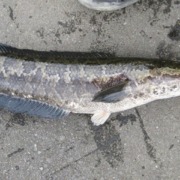
Top: Taiwanese mudfish, Bottom: mudfish


When fishing for croaker, it is important to focus on attacking the same spot because the croaker will continue to attack even if you fail to catch it. This is similar to the Korean people who have continued to endure despite foreign invasions, which is a somewhat exaggerated analogy.

As I watched Japan fail to acknowledge South Korea’s status as a model country for preventing the spread of COVID-19, which is spreading worldwide, I suddenly thought of Japan’s drought and wrote a few words.

Parasites of cuttlefish (squid)

Many people believe that squid does not contain parasites, and some popular blogs even claim that it is safe to eat because it does not contain parasites. However, this is incorrect.

In particular, the cuttlefish, which is called the king of squid and is a high-quality target for fall eging fishing, also has parasites, but not as many as other fish.

Parasites that affect cuttlefish include Nibernia (niberine tapeworm) and  Anisakis , which are found in many fish .

Some say that anasakis can be killed with spicy seasonings such as ginger, garlic, and horseradish, but this is completely false. It will not be killed by pickling in salt or vinegar, so it must be removed before consumption or killed by heating or freezing for a long time.


Also, Nibernia is about 5mm long and looks like a grain of rice in color and shape. It is said that almost 100% of squid have Nibernia. In particular, because many parasites live in the intestines of squid, the part of the squid where the intestines are connected, which is enjoyed for its soft texture, must be cleaned especially thoroughly.

However, this niberinia is known to be harmless to humans. But is there really any need to eat parasites? ^^

Niberinia is particularly abundant in the intestines of cuttlefish and may also be present on the skin surface. Its milky white color contrasts with the white color of the cuttlefish, making it easily identifiable with the naked eye.


In conclusion, when eating squid, especially cuttlefish, it is recommended to heat it to a temperature of 60℃ or higher for more than 1 minute or store it at -20℃ or lower before eating. There is a theory that it takes 24 hours for all parasites to die when frozen, but  in Japan, where research on cuttlefish is advanced, 48 hours is recommended.


Also, when eating freshly caught cuttlefish as sashimi, be sure to remove the intestines. Some people enjoy eating the part surrounding the intestines because it has a particularly soft texture, but we recommend that you remove the intestines and wash it thoroughly with salt before eating.

What part of squid should never be eaten raw?

When eating raw squid, there are some things to be cautious about, like the parasite anisakis. However, since the spermatozoa (or sperm cysts) of the squid introduced today are rarely eaten raw, there’s no need to worry too much.

However, if you are not careful when eating raw cuttlefish caught by fishing, such as cuttlefish, you may end up having to see an oral surgeon. So, today, we will learn about the parts of squid that should never be eaten raw.

Cephalopods lack developed external genitalia, so they use spermatophores or spermatophore to insert sperm into the female’s body. The spermatophores of cephalopods, in particular, are so sophisticated in structure that they were previously mistaken for parasites. [Reference: spermatophore]

The spermatophore of a cuttlefish looks like this, and the tip of the spermatophore is shaped like an arrowhead, so it is said to stick to the female’s body and not fall off.


The squid’s intestines are easy to distinguish with the naked eye, but the best way is to avoid eating the intestines raw if possible, as we saw in the previous post,  “Parasites of Cuttlefish,” because squid parasites are especially abundant in the intestines.

The spermatozoa of squid are stored in a storage pouch, with 1 to 100 of them. They move alive when touched, so they were mistaken for parasites in the past.


When sperm cells come out of the storage bag, they stick out and get stuck, but if you place the sperm cells of a cuttlefish on a chicken for an experiment, you will soon find that they dig into the chicken flesh.


However, if you do not know this and  have sex with a penis, the penis will become lodged in your mouth, making it difficult to remove. It will also be very painful, and you may end up having to go to the hospital for anesthesia and treatment. Therefore, you should never have sex with a penis. (The photo below is a case that occurred in Korea.)


Because the squid is resistant to salting or boiling,  it can stick to cooking utensils like knives and cause injury if it gets stuck in your mouth. Therefore, caution is advised when preparing squid at the fishing spot . However, freezing reportedly destroys the squid’s ejection function.