
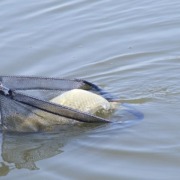
Does remember the fish being caught by fishing?

When fishing in rivers, oceans, and reservoirs, you may occasionally encounter fish that don’t even bother to bite the bait, even though they are actually numerous and active. This can often lead you to conclude that the fish are either becoming more wary or their numbers have decreased.

In response to these questions that anglers have, there have been two theories that have been passed down for over 50 years: one is that fish that have been caught at least once remember the hook and have learned from it, so they are not easily caught; the other is that some fish are inherently good at catching. Recently, the results of an experiment that combined these two theories have been published.

There is “Beukema’s learning theory” that fish remember the experience of being caught by fishing, and “Martin’s hypothesis” that there are individual fish that are good at catching. Today, we will first learn about “Beukema’s learning theory”.

Dr. Jan J. Beukema of the Royal Netherlands Marine Institute published a paper in 1970 that could be translated as “Decreasing catchability through one-trial learning.”

For his experiment, Dr. Beukema placed carp that had never been caught by fishing before in a test pond and had 800 people fish every day for two weeks, using whatever equipment and bait they wanted.

However, any carp caught had to be tagged and released, and fishing time per person was limited to four hours per day.


According to the experimental results, the best catch per person was on the first day (average 1.24 fish), and it started to decline from the second day, and on the fifth day, it was about a quarter of the first day’s catch. In other words, the fact that it became increasingly difficult to catch carp even though there was always the same number of carp in the pond led me to think that the carp might be avoiding the bait attached to the hook after learning from the experience of being caught on the hook. To verify this, I used two methods.

The first one predicted and actually observed that whether or not a carp without learning effect would be caught would be determined randomly and that the number of times it was caught would match the “Poisson distribution.”

However, the experimental results were significantly different from the Poisson distribution, contrary to the predictions, and the number of carp caught for the first time was much lower than predicted.

The second verification method was to see what percentage of the carp caught that day had been previously caught by fishing. From day 1 to day 4, 20-30% of the carp that had never been caught before were caught by fishing, confirming that the carp that had been caught by fishing before were more likely to be caught than the 5% that were caught again.

However, from the 5th day onwards, regardless of whether they had experience catching fish or not, they only managed to raise the catch rate by 5%. Based on this, Dr. Beukema concluded that this was due to the learning effect that most of the carp in the pond had already been hooked at least once after 4 days since the start of the experiment.


Dr. Beukema also announced that the fish’s learning effects persist even after a year. How is Dr. Beukema’s theory currently being accepted? And can it be validated simultaneously with “Martin’s hypothesis,” which we’ll discuss next time, that certain fish are particularly good at catching?

If you’re curious, please look forward to the next episode^^
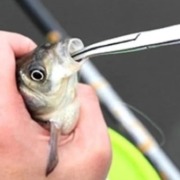
If you let go of a fish that has swallowed a fishhook, will it survive?

When fishing, it’s common for fish to swallow the hook so deeply that it’s difficult to remove. In such cases, anglers generally accept the idea that simply cutting the leader and releasing the fish will save them. However, the National Fisheries Research Center of Japan recently published experimental results confirming that simply cutting the leader and releasing the fish is the right thing to do.

The experimental method announced by the Aquaculture Research Institute of the Fisheries Research Center of Japan involved cutting the necks of trout (Japanese salmon) caught by fishing and releasing them after they had swallowed a hook, attaching tags to them.


The results of the experiment showed that the needles remaining in the body of the maggot corrode, break off, and are excreted.

Additionally, it was found that 72 of the 77 released fish, or 93.5%, survived, and 53 of them, or 68.8%, were caught again by fishing.

When releasing a caught fish, it is best to release it in a healthy state if possible, but if the fish has swallowed a needle, it is better to cut the leash short and release it rather than forcibly removing the needle.


Until now, it was unclear how to properly dispose of the animal, but I hope that in the future, when it is difficult to remove the needle, many people will realize that they can survive by simply cutting the leash and releasing it.

I would also like to point out that catch-and-release, which is practiced with good intentions, can take the lives of fish, contrary to one’s intentions.

As I discussed in the article “Catch and Release Practice Begins with the Selection of Hooks” a long time ago, in countries like the United States where fishing is a sport, even the hooks used to increase the survival rate of fish are regulated in detail, even when the fish are released. It is true that research support from the government and companies plays a big role in making such regulations possible.

However, in contrast, in our country, there is a government move to impose a surcharge on anglers based on an absurd research report that the average catch of anglers is 6.5 kg. Therefore, we cannot help but criticize the convenient and desk-bound administration that sticks to a complacent policy of one-sided regulation.

As mentioned above, the United States has detailed regulations on even the hooks used for fishing, and numerous research reports provide the basis for this. I think that the research results announced by the University of California in 2018 are something that our anglers should think about and put into practice at least once, so I will summarize them.

It is something that can often be seen at fishing spots, but when fish are pulled out to release their catch, they often injure their mouths and sometimes even damage their organs.

If you are not used to removing the hook and you think it might cause damage to the fish’s mouth or body, rather than forcing it out, cut the line and release it to increase the chances of survival.

Researchers at the University of California caught 10 shiner perch with nets and 10 with hooks near Canada’s Bamfield Marine Sciences Centre, and then used high-speed cameras to observe how the feeding behavior of the hook-caught fish was affected by injuries around the mouth.


As a result, it was discovered that fish with injuries around their mouths due to fishing hooks ate less quickly, and the way fish with injuries around their mouths inhale food is said to be similar to how we drink beverages through a straw with a hole in it.

The researchers say more detailed research is needed to determine how the decline in the fish’s ability to forage affects their long-term survival. Information about the research team can be found on their website (Higham Lab) .